My goal for “Raid Night!” was to make a casual TTRPG proof of concept project to test my design capabilities and challenge my understanding of game balance in RPG or RPG-adjacent games.
PvEvP: I feel that even in a casual setting, having both the game and other players serve as obstacles for the individual player is engaging design.
Power Fantasy: I wanted players to capture the feeling of meaningful power growth as I remember in myriad MMORPG titles.
Fantasy MMORPG Thematic: Fantasy MMORPGs are one of my all-time favorite genres, I thought it would be interesting to bring that theme into a boardgame format.
During this project’s development, I sought regular feedback from Jeremiah Franczyk (Lord of the Rings Online), who taught me how to intentionally design interesting gameplay decisions for players.
Overview & Technique Highlights
Game Premise: Hey you! A new raid tier is out in your favorite MMORPG, and this time your guild is going to be the first in the world to clear the Raid Boss!
Assemble your guildmates on a definitely-not-last-minute adventure to grind out monsters, complete quests, and do whatever it takes to prepare to fight the new raid boss. You’ll have to compete with the other guilds on the server who are also looking to claim the glory of world’s first clear, make sure that doesn’t happen! To the victor goes the spoils (and bragging rights)!
In this casual TTRPG experience, you and up to 5 other players take the role as guild leaders to guide their guildmates through a treacherous raid. Gear up, fight hordes of enemies, complete quests, and prepare as much as you can to defeat the Raid Boss before anyone else can.
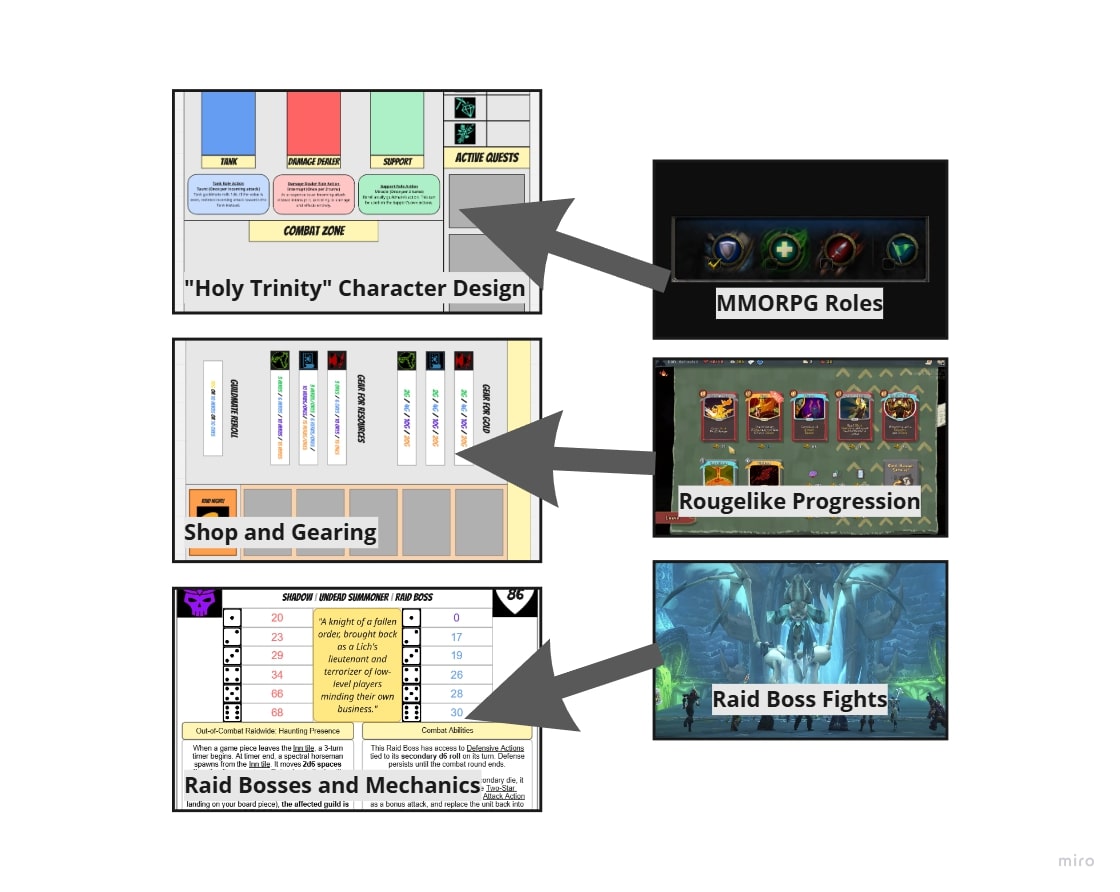
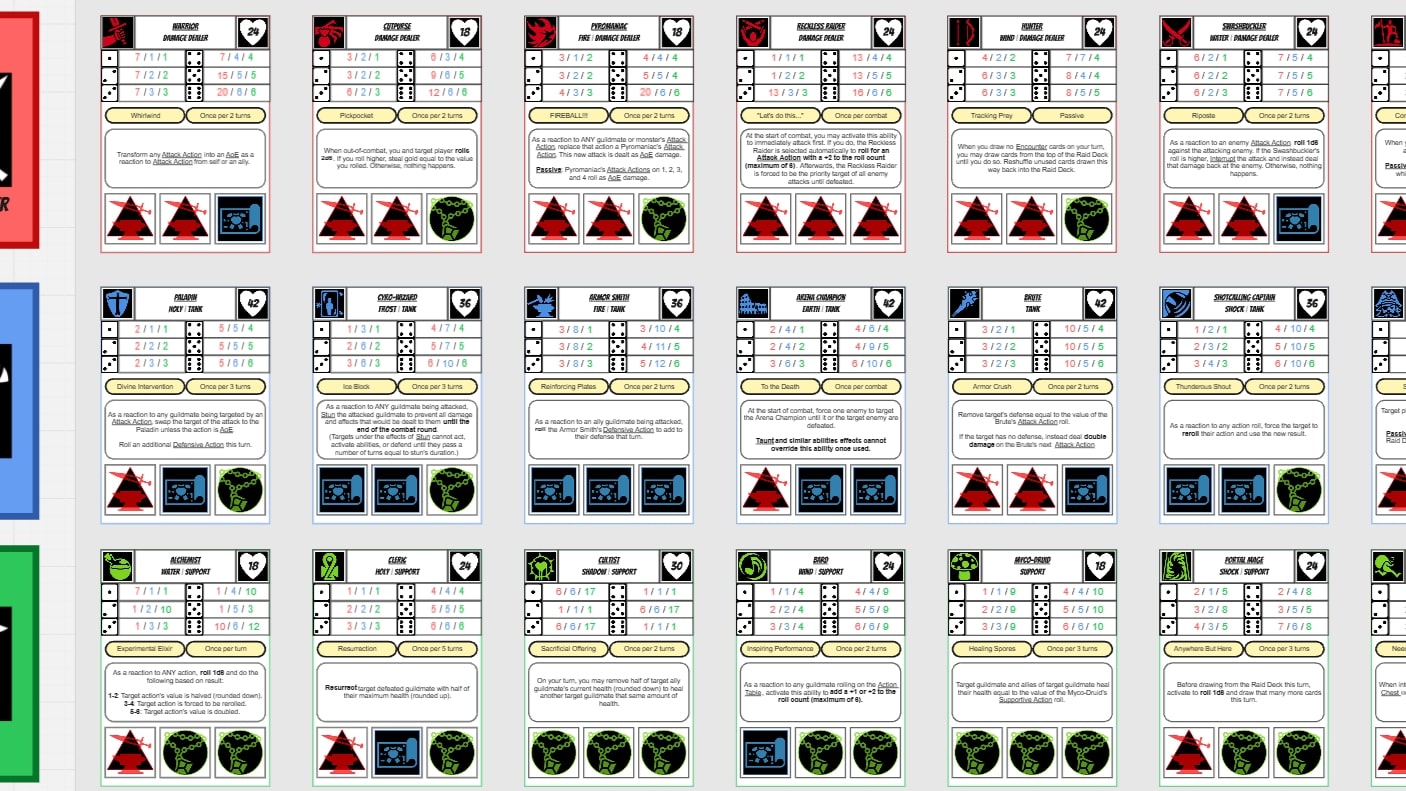
Technique Highlight #1: The Guildmates and the Holy Trinity
Visualization of Mechanic
Goal: I wanted to create an interesting variety of unique MMORPG characters without skyrocketing the complexity of the game with their individual mechanics.
Result: I designed and implemented guildmate cards adapting to a consistent card format portraying their necessary information.
Techniques
Guildmates are separated by their role, and their statistics hint players towards utilizing them for their preferred actions.
Variable statistics and gear token slots provide additional variance to subsequent playthroughs of the game.
Each guildmate having a unique ability allows for players to adapt to new strategies and combat tactics throughout the game.
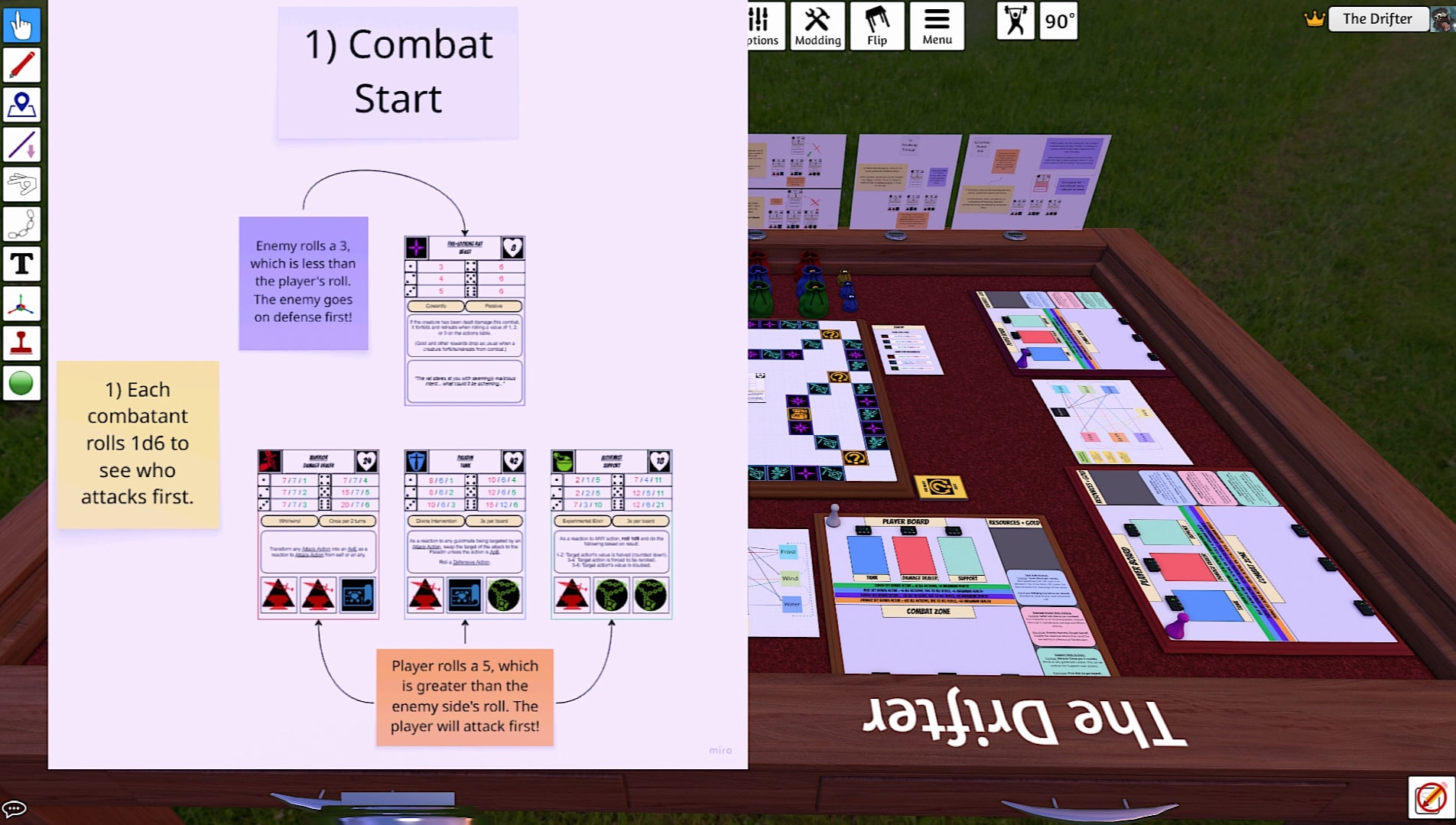
Technique Highlight #2: Combat
Visualization of Mechanic
Goal: I wanted to simulate the concept of leading a guild or party of heroes throughout a raid and having each member of the party contributing to combat in their own ways.
Result: I designed a combat system which has the entire guild of heroes present to fight the enemy encounters of the game.
Techniques
Rolling dice for the results of combat for both player-characters and enemy encounters preventpredictable outcomes in combat.
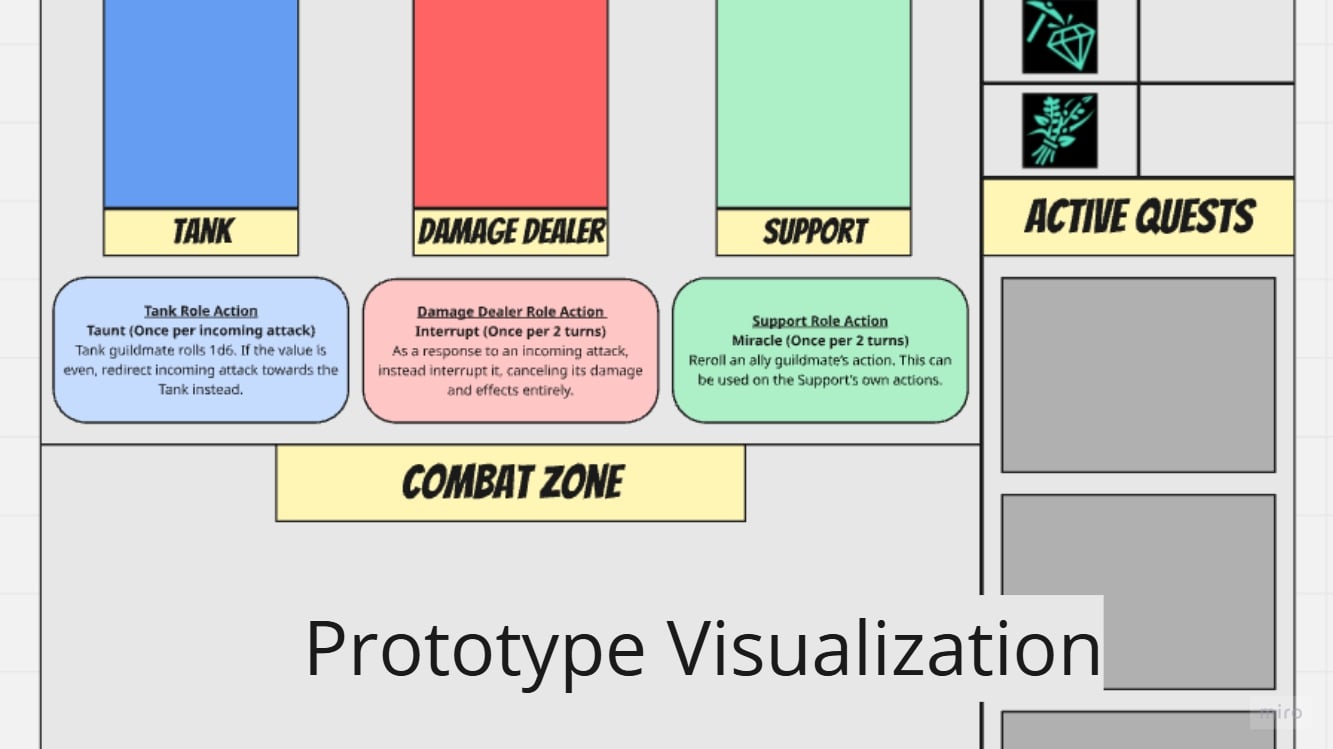
I provided further implementation of the guildmates’ roles by designing Role Actions which allow for additional combat choices.
Gear tokens allow for additive bonuses in guildmate action results, providing players with a persistent incentive to improve their guildmates.
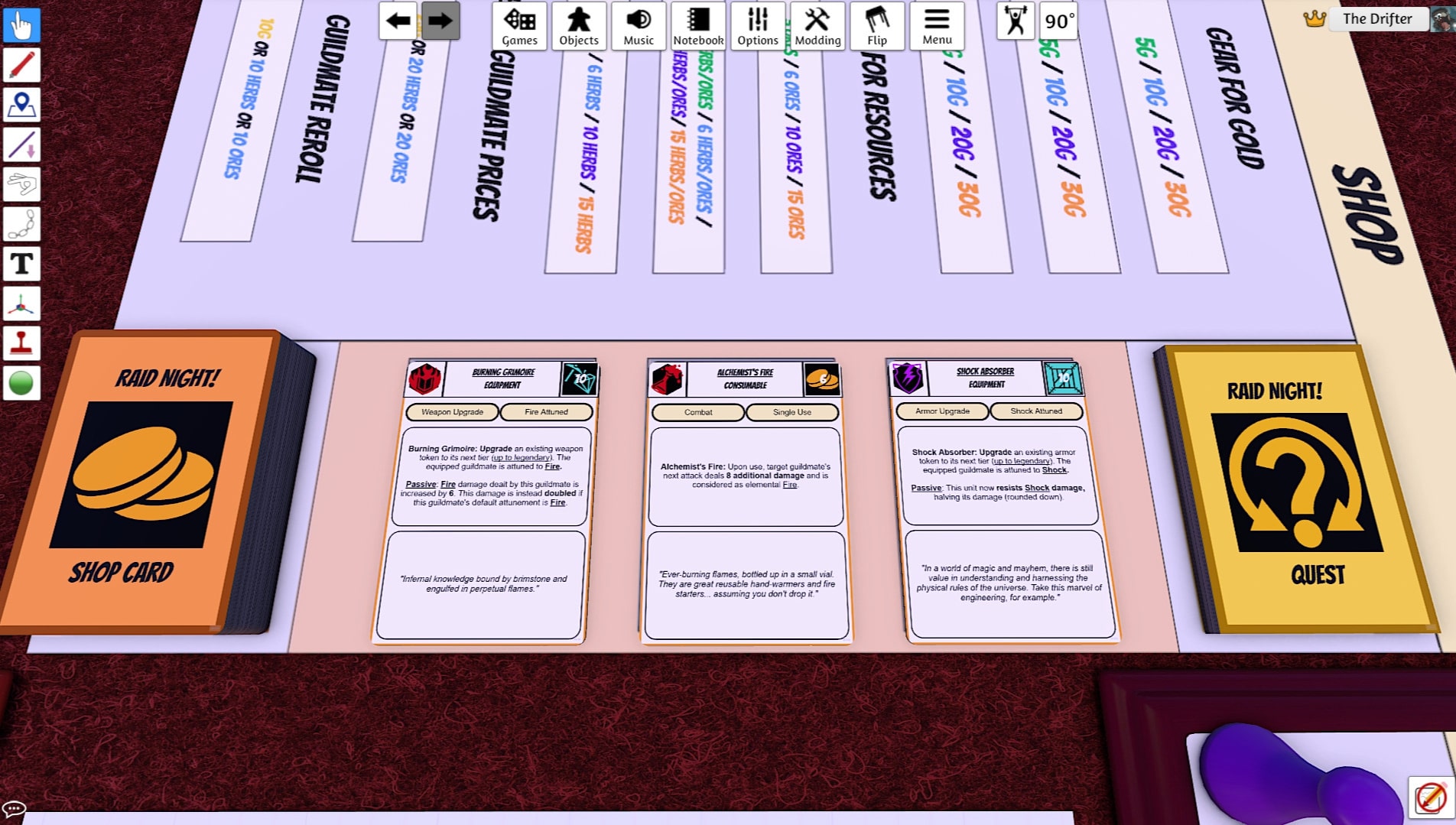
Technique Highlight #3: The Shop and Shop Deck
Visualization of Mechanic
Goal: I needed a way for players to spend their resources to gain power, as well as provide more interesting choices in how they upgrade their party.
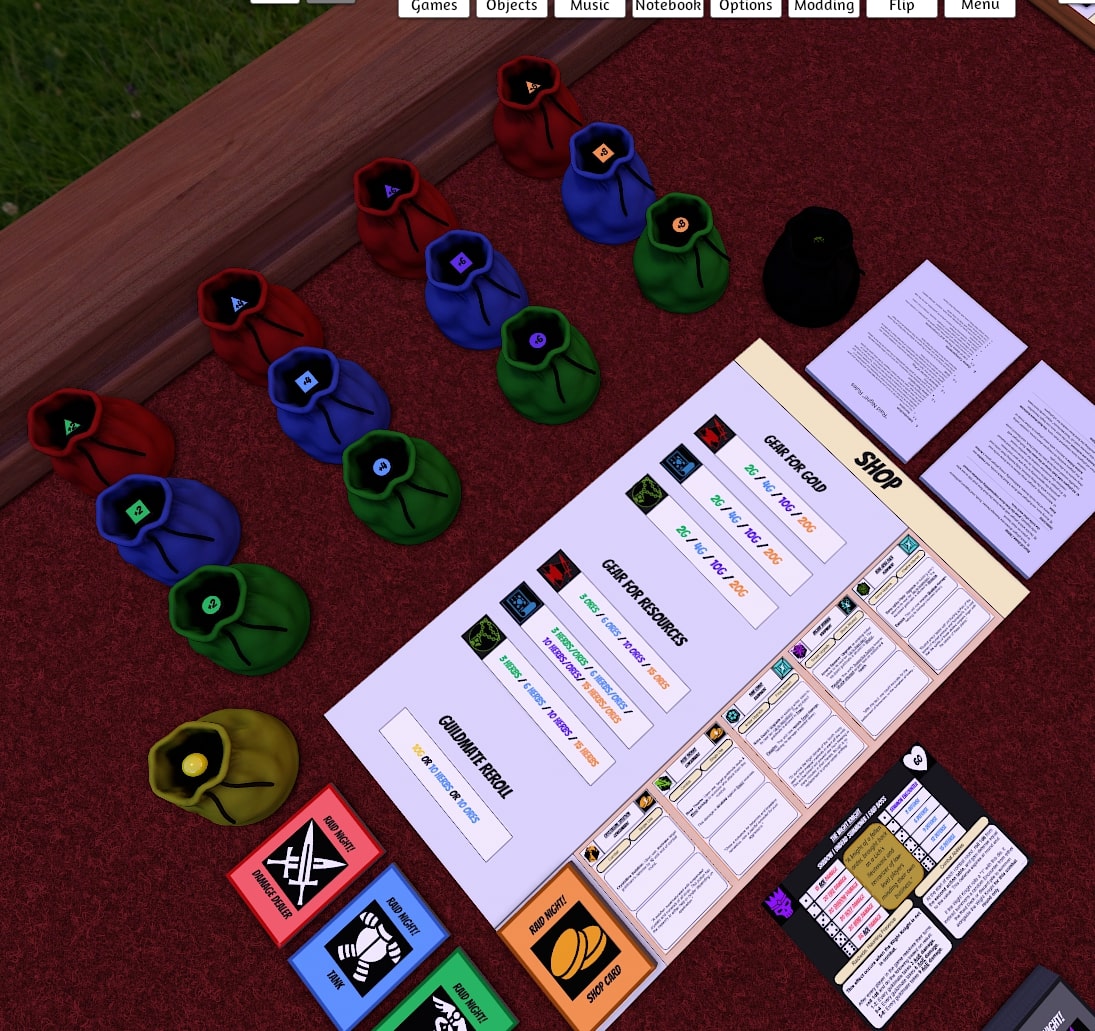
Result: The Shop provides players with a reliable way to obtain upgrades, and coupled with the Shop Deck, new consumable items to add extra utility and combat choices.
Techniques
The Shop Deck provided players with additional incentive to visit the shop for reasons beyond just obtaining static upgrades.
Regardless of how which kinds and how many resources a player has, players could still find ways to gain an advantage through unique items or stocking up on cheaper upgrades.
I allowed players to reroll their guildmates to allow them to readjust their current strategies and choices or spend their resources to optimize their guild for the challenges ahead.
Process Breakdown
1. Research, Ideation & Planning
I wanted to capture the idea and culture around “raiding” content found in MMORPGs and convert that experience into a casual TTRPG with a matching fantasy theme. In doing so, I can make fun parodies of and pay homage to the MMORPG games I have grown up playing throughout my life.
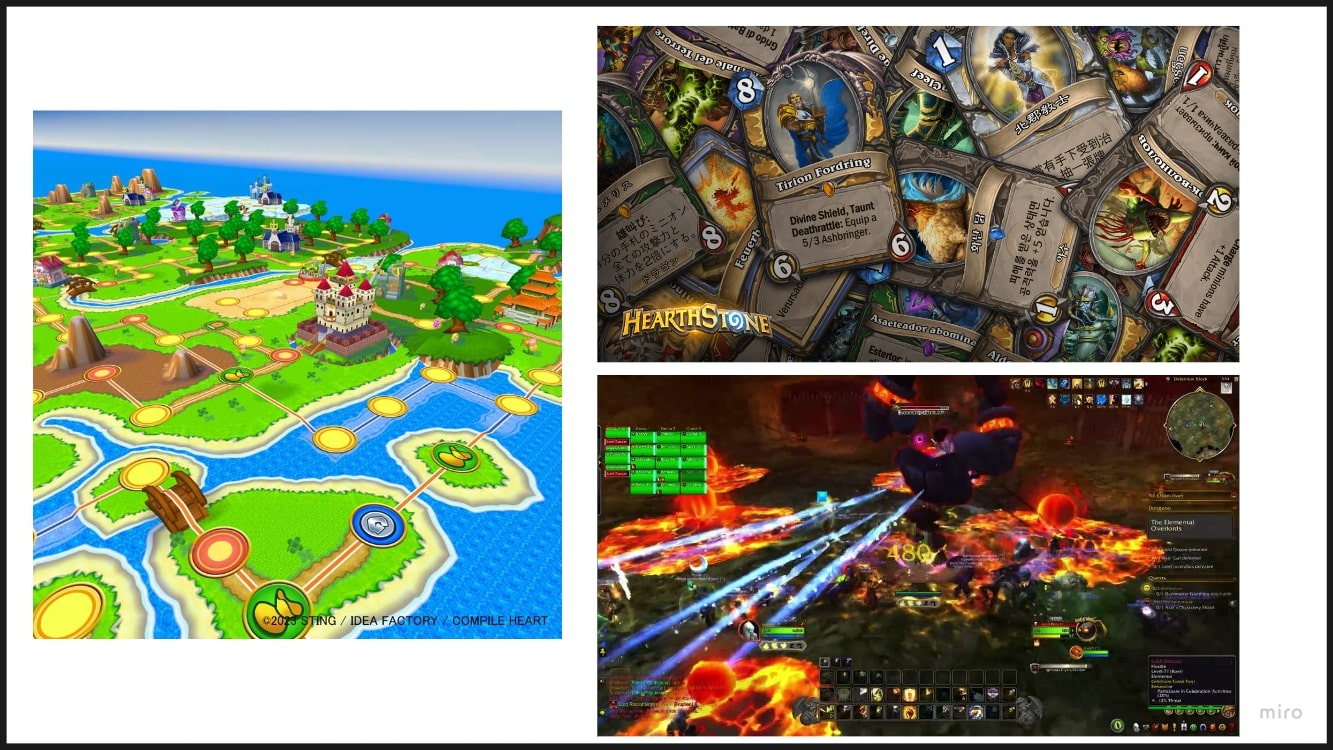
Analyzing Games: The lighthearted “PvEvP” gameplay inspired by the structure of virtual boardgame RPGs such as Dokapon Kingdom. The effects and abilities are inspired from card games such as Magic the Gathering and Hearthstone. The MMORPG thematic comes from a lot of games of the genre, most prevalent being World of Warcraft.
Ideating Mechanics: Guildmate Abilities are meant to be unique actions, adding character identity and gameplay and strategy variation in subsequent playthroughs.
Resonant Theming: A parody of a fantasy MMORPG lends ample opportunity to piggyback off of mechanics and concepts such as “gearing” and “questing”. There is thematic resonance in the tropes of RPG monsters and questing in MMOs.
2: Design Document - Rulebook
Premise: I thought up of some of the core mechanics with this boardgame. These included:
A “holy-trinity” design philosophy comprising of tank, damage dealer, and support character class decks.
Numerous methods of upgrading your characters through gear tokens and shop cards.
Questing, gathering, and fighting a variety of enemies for loot through event-based gameplay.
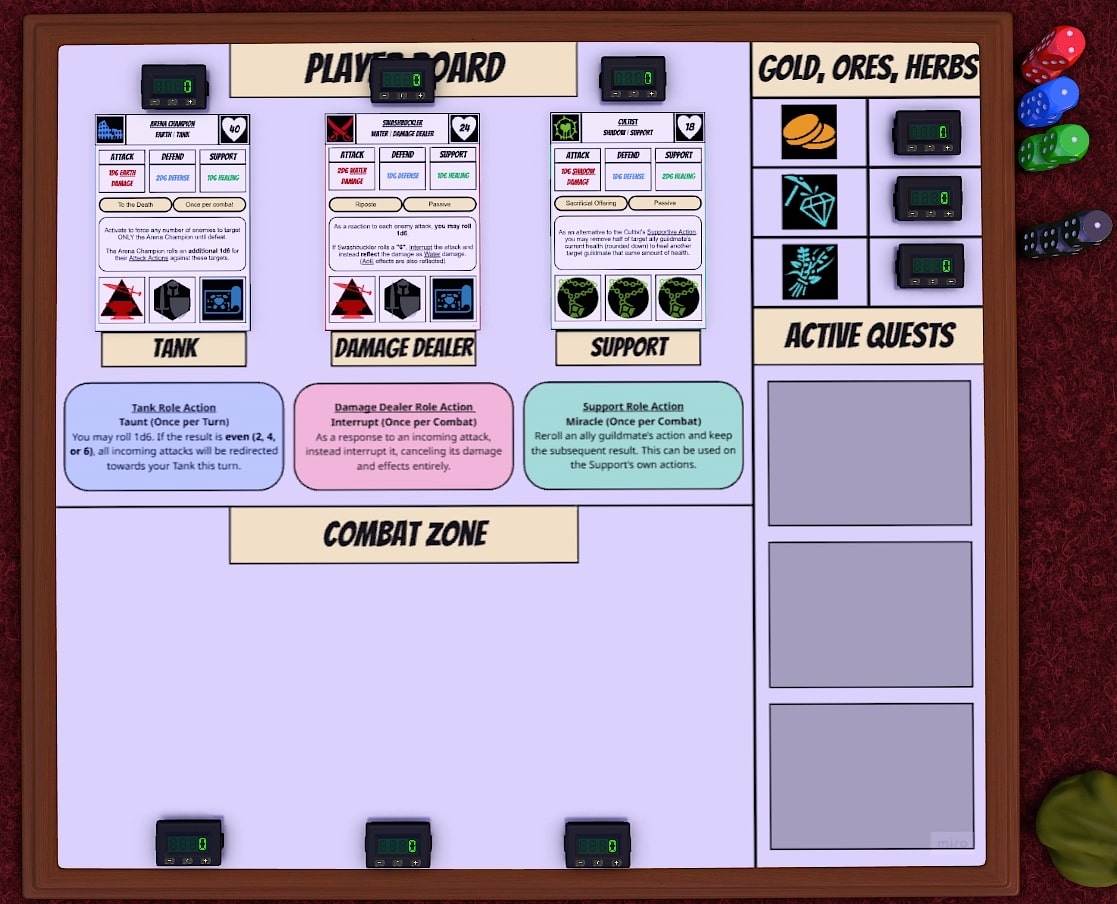
Player boards to track their assortment of characters, resources gathered, active quests, and a combat zone.
Theme: Since this boardgame is meant to be a parody of fantasy MMORPGs, the variety of classes, enemies, and items a player could encounter are reminiscent of other popular titles of the target genre. The goal of the game itself, being the first to defeat the new raid boss, is also a familiar task by hardcore players of MMORPGs; this particular experience is what this boardgame seeks to imitate.
3. Prototyping
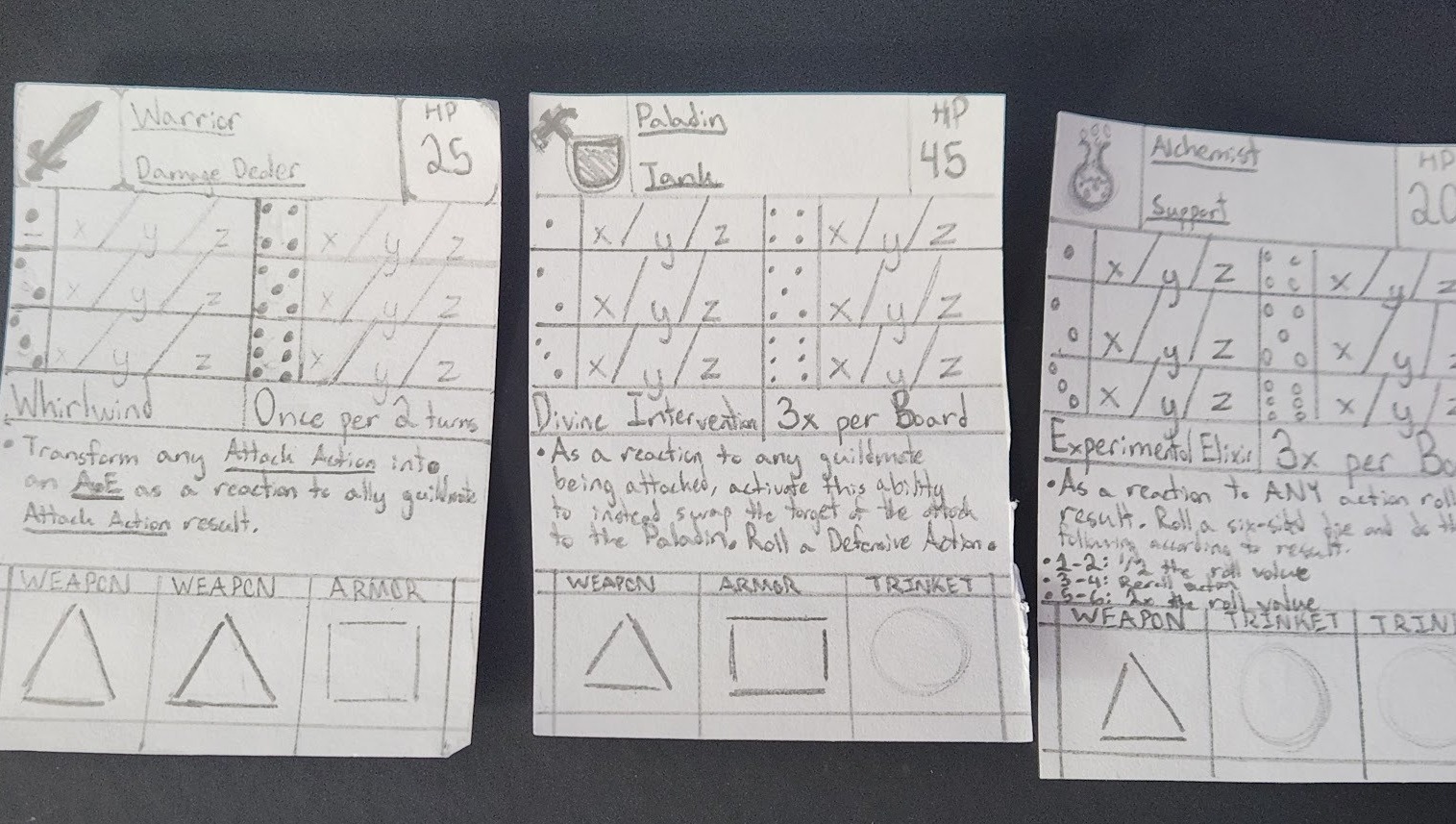
Paper Prototype
Result: The balancing of individual character statistics and their abilities was uncertain; a lack of consistency between character roles was present.
Goal: Establish consistent properties of each character role, determine the distribution of stats in an intuitive manner.
Solution:
I organized all potential characters within a spreadsheet, allowing for the quick comparison and editing of statistics.
I established a “point” system for statistics and made them related to the quantity of specific gear slots each character possesses.
Health counts were organized within specific point ranges defined by character roles.
Rapid Prototype Highlight #1
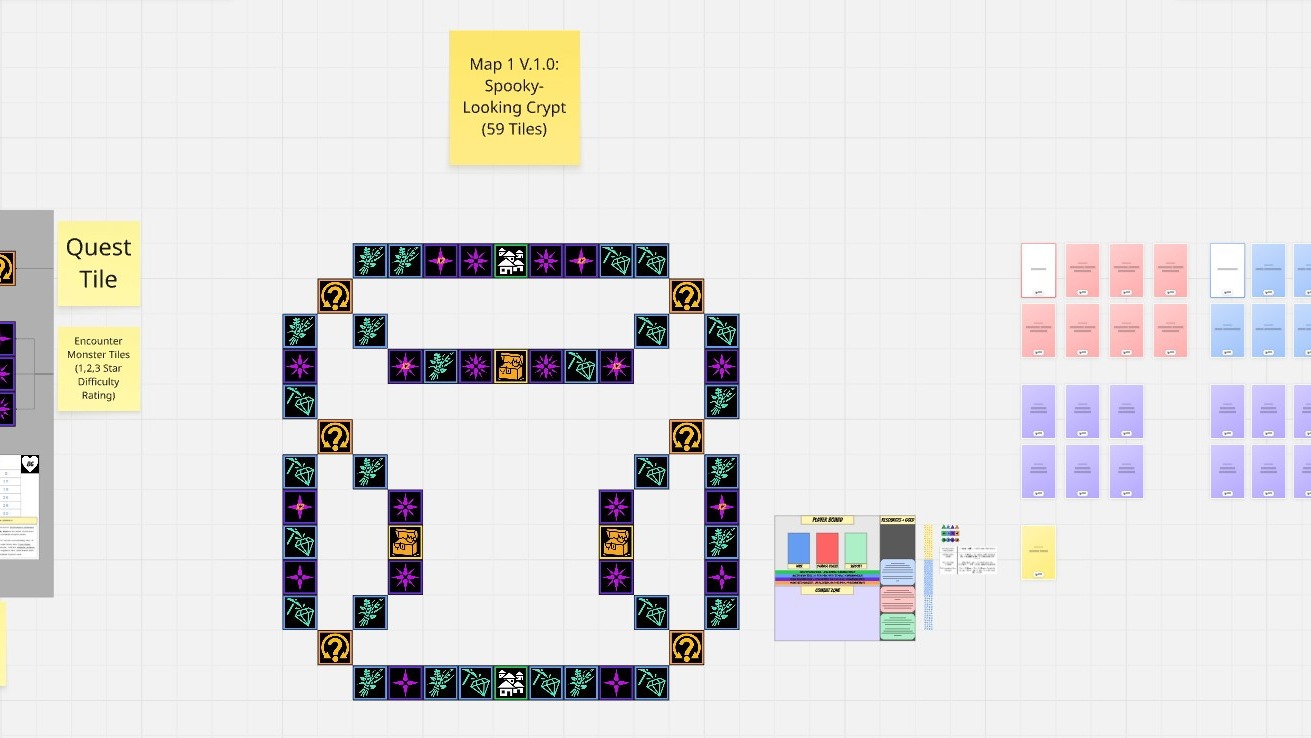
Result: Players found the physical gameboard and roll-to-move interactions to be too restrictive and clashing with the game’s pacing.
Goal: Develop a new way to introduce randomized events, while also matching the theme of the Raid Boss with unique their own unique events.
Solution:
Raid Deck: improved design space for Raid Boss mechanics through an encounter deck-system to replace the gameboard.
Reduce the frequency of roll-based mechanics altogether; mitigate the amount of time each player spends on their turns.
Change the turn order system to allow every player to take their turns at once, to further reduce collective time taken between a cycle of turns.
Rapid Prototype Highlight #2
Result: Players had trouble keeping track of the count of resources they had, quests obtained, and consistent rules for each character’s Role Actions.
Goal: Develop a way to easily track aforementioned information, while reducing visual cluttering of previous iterations of the player board.
Solution:
Trim down details and mechanical bloat to better fit the design room of the player board.
Instead of physical counters being stored on the board, insert an area to manually enter the value of resources obtained.
A brief reference to each Role Action is mentioned below each role’s respective space, preventing constant reference to the rulebook for this mechanic.
4. The First Interactable
Result: Recreated a holy-trinity mechanic synonymous with MMORPGs, added a simple method to gearing and upgrading the characters, and added combat with a variety of enemies.
Goal: Built a playable prototype of the boardgame with all of the character cards, player boards, a physical board, and a shop with tokens to upgrade the player’s characters.
Implementation:
Mechanic Synergy 1: Guildmate abilities and event-based interactions. Some guildmates are better suited for aggressive playstyles rather than economy-focused ones.
Mechanic Synergy 2: The holy-trinity oriented design of the game allowed for unique yet purposeful characterization.
Narrative Synergy: I took plenty of refence to popular fantasy MMORPGs for the ideation of new characters, enemies, and common tropes for mechanics found in raids.
5: Playtest & Key Iterations
Playtest #1 Highlight
Playtest #1
Playtest Recording
Result: The combat was too difficult to understand from the rules; each player interpreted the rules differently.
Feedback & Problem: Clearer documentation would have benefitted the experience. I needed to reduce the time needed to understand the base systems of the game.
Solutions: The wording within the rule books was revised for clarity, and combat diagrams were attached for the next playtesting group.
Playtest #2 Highlight
Playtest #2
Playtest Recording
Result: Players were engaged with the revised combat system and were able to pick up the system relatively quickly. Players also naturally used the unique actions of their guildmates.
Feedback & Problem: Two major issues emerged: the visible complexity of the game’s elements, and the gameboard mechanics clashing with the game’s design goals.
Solutions: The roll-to-move gameboard was scrapped and ultimately replaced by an encounter deck including the developed content from the gameboard.
Playtest #3 Highlight
Playtest #3
Playtest Recording
Result: The encounter deck implemented gave players the opportunity has unique, unpredictable turns. Players felt less overwhelmed by the appearance of the game’s elements.
Feedback & Problem: Interaction between players at the table was extremely limited, the game itself felt as if everyone was playing their own single-player games simultaneously.
Solutions: I implemented an action-point system and ways to spend AP to interact with other players at the table.
6. Polished Portfolio Piece
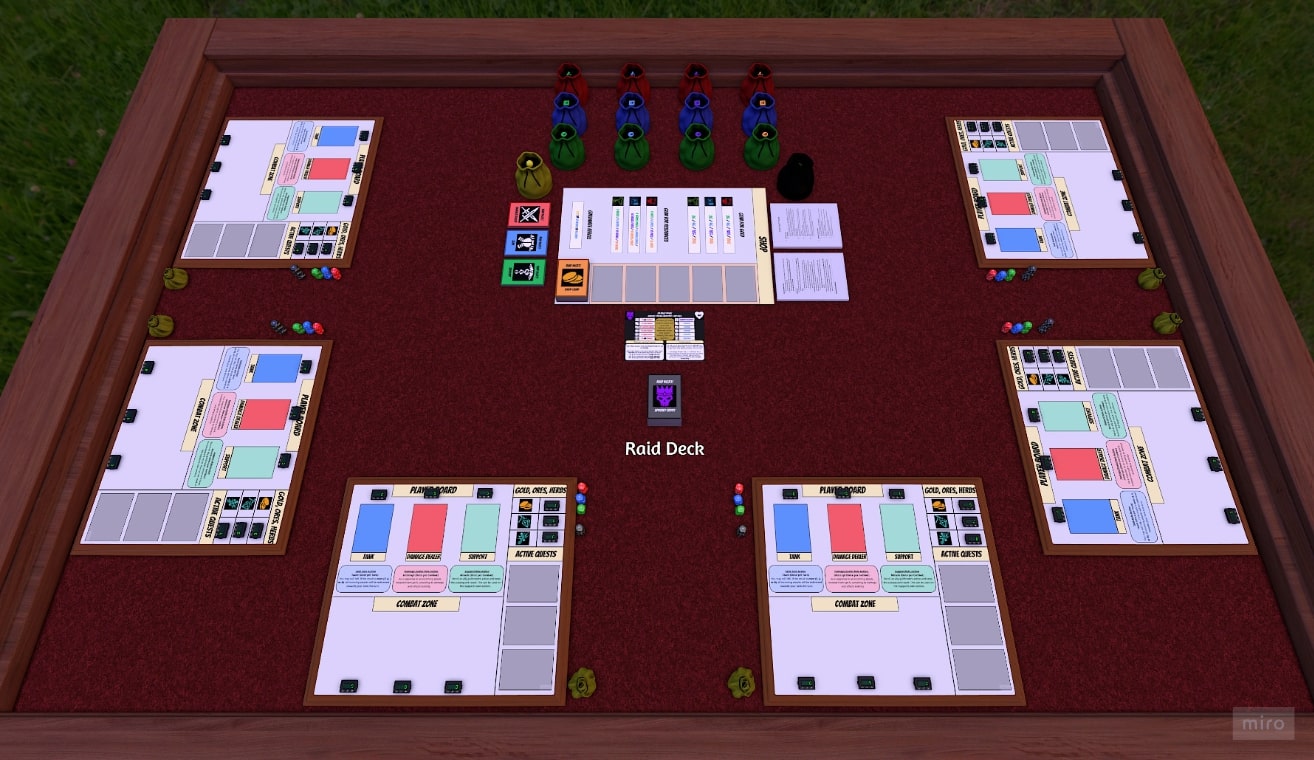
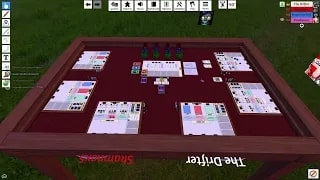
Full Gameboard
Character Board & Guildmates
Shop & Gear Tokens
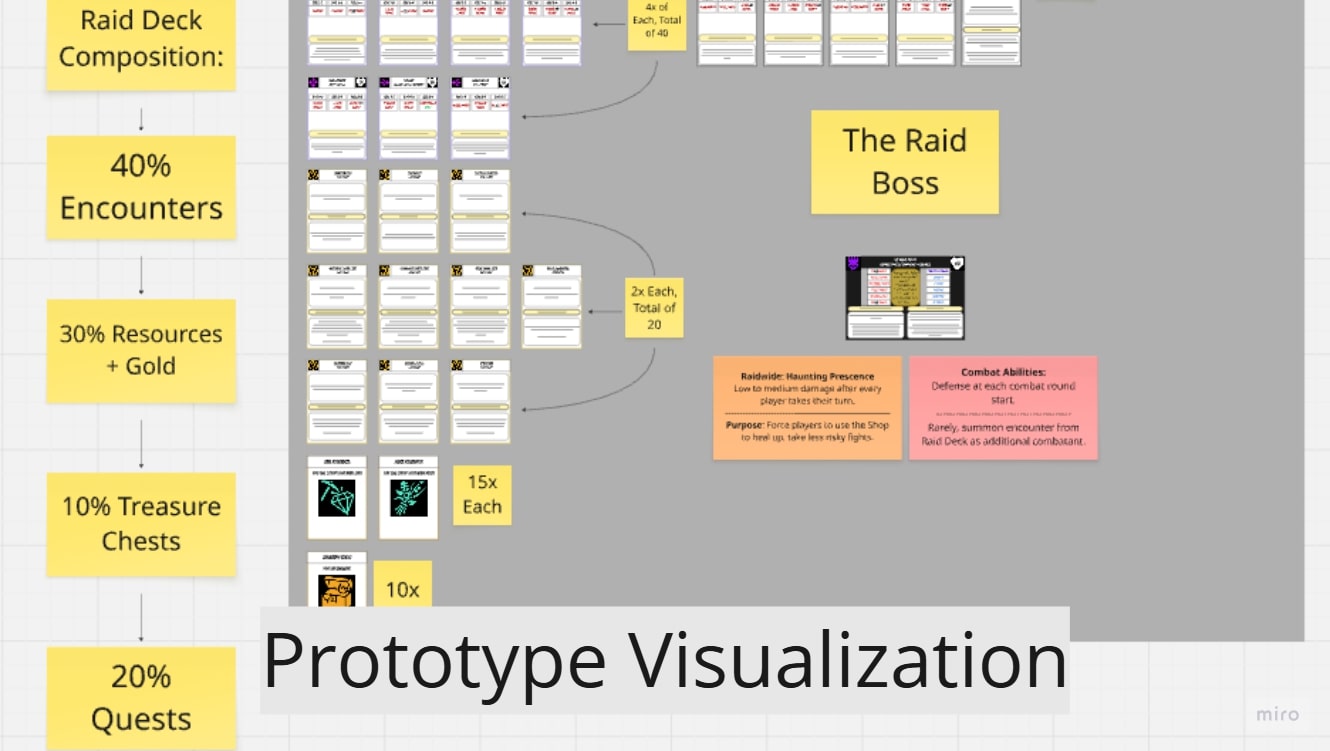
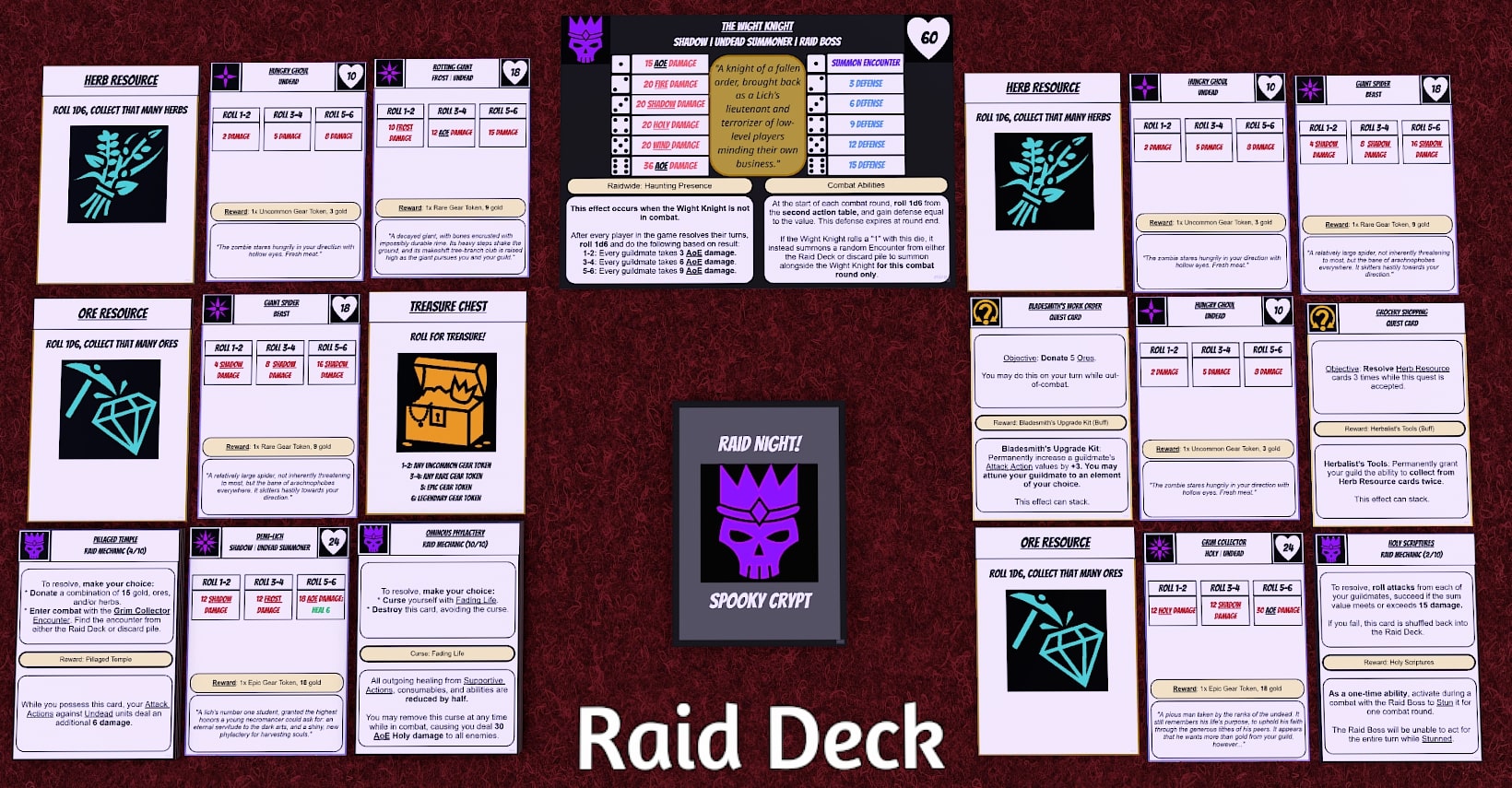
Raid Boss & Raid Deck
Results: Developed a TTRPG boardgame on Tabletop Simulator, complete with 12 characters of each of the 3 roles, a 110-card Raid Deck, the shop deck, and the Raid Boss to create the full game experience.
Goal: Provide a casual TTRPG experience which reflects the ideas and feeling of progression and raiding in mainstream MMORPGs.
Execution:
36 Unique Guildmates: Developed characters with special abilities and variable upgrades.
Raid Deck: Tailored an encounter deck filled with an assortment of content for players to discover and resolve.
Six-Sided Dice Design: Designed all interactions around rolling six-sided dice, allowing for mechanics to be quickly picked up by newer players.